
Universal Mailbox Locks
Shop universal replacement mailbox locks at Noble Key Supply. This collection includes spring-clip and hex-nut cam locks for compatible residential and privately maintained mailbox applications.
Each available lock package includes two keys, five replacement cams, and application-specific mounting hardware. Compare the existing lock, mounting method, cam dimensions, rotation, and mailbox construction before selecting a replacement.
Replacement Mailbox Cam Locks
A mailbox cam lock uses a rotating metal arm, known as a cam, to secure the mailbox door. When the correct key turns the cylinder, the cam moves between the locked and unlocked positions.
Mailbox locks may need replacement when:
- The original keys are lost
- A tenant or property owner changes
- The cylinder is worn or corroded
- The key no longer turns smoothly
- The cam is bent or damaged
- The mounting hardware becomes loose
- The lock has been vandalized
- The mailbox door no longer remains secured
Choosing the correct mounting system and cam is essential for reliable operation.
Universal Mailbox Locks
Universal mailbox locks are designed to fit a range of common mailbox configurations. They offer a practical solution when an exact original lock is unavailable or unnecessary.
“Universal” does not mean that one lock fits every mailbox. Compatibility can depend on:
- Cylinder diameter
- Lock-body length
- Door thickness
- Mounting method
- Cam length
- Cam offset
- Cam orientation
- Direction of rotation
- Clearance inside the mailbox
- Existing latch position
Measure and inspect the original installation before ordering.
Spring-Clip Mailbox Locks
The ESP spring-clip mailbox lock uses a retaining clip to secure the cylinder to the mailbox door. This mounting style can simplify replacement when the existing mailbox accepts a clip-mounted cam lock.
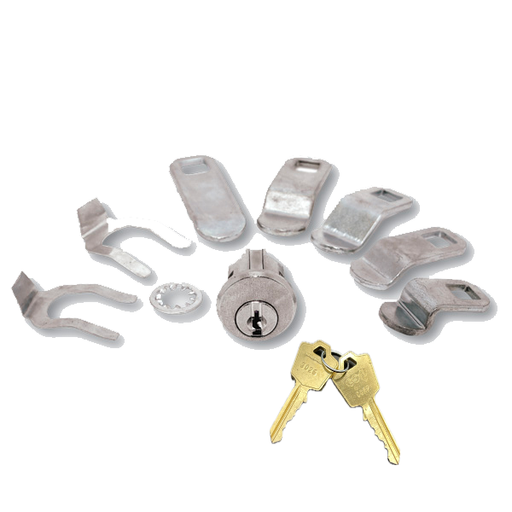
The PTR-656UN spring-clip package includes:
- One universal mailbox lock
- Two operating keys
- Five OHE replacement cams
- Two mounting clips of different gauges
The two clip gauges help accommodate compatible mailbox doors with different mounting requirements. Use the clip that holds the cylinder securely without damaging or distorting the door.
Hex-Nut Mailbox Locks
The ESP hex-nut mailbox lock uses a threaded body and hex nut to secure the cylinder to the mailbox door.
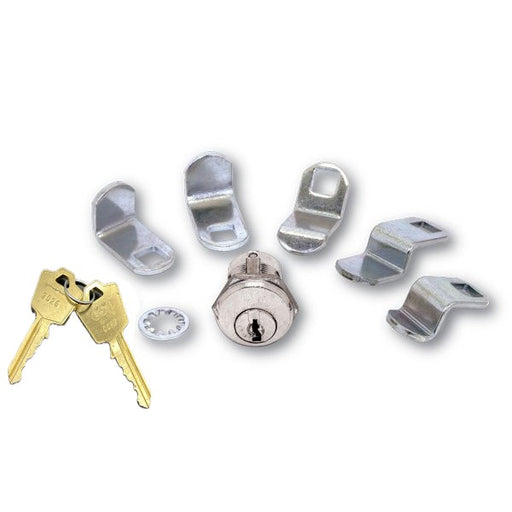
The PTR-656UN-HN package includes:
- One universal mailbox lock
- Two operating keys
- Five OHE replacement cams
- One hex nut
The hex-nut version is listed with counterclockwise key rotation. Confirm that this rotation matches the mailbox’s latch orientation and available internal clearance.
A lock with the wrong rotation may interfere with the door, fail to engage the strike, or move the cam away from the required locking position.
Spring Clip Versus Hex Nut
The correct mounting style depends on the mailbox door and existing lock opening.
A spring-clip lock may be appropriate when:
- The original cylinder uses a retaining clip
- The door is designed for clip mounting
- Rear clearance is limited
- A compatible mounting groove is present
A hex-nut lock may be appropriate when:
- The cylinder passes through the door
- The lock body is externally threaded
- A rear nut secures the original lock
- There is enough clearance to tighten the nut
Inspect the original lock before removal whenever possible. Switching mounting styles may not work if the mailbox door lacks the correct dimensions or clearance.
Five Replacement Cams
Each lock package includes five OHE replacement cams. These options allow the installer to select a cam that best matches the mailbox door and latch location.
The correct cam must:
- Reach the mailbox strike or frame
- Clear nearby components
- Rotate in the required direction
- Hold the door closed without excessive pressure
- Release fully when unlocked
- Avoid scraping or binding
A cam that is too short may not secure the door. A cam that is too long can strike the mailbox body or prevent the key from completing its rotation.
Cam Length and Offset
Cam length describes the distance from the lock’s centerline to the cam’s locking end. Offset describes whether the cam bends toward or away from the lock body.
Both measurements affect fit.
A straight cam may work when the lock and strike are aligned. An offset cam can compensate when the latch surface sits deeper or shallower than the rear of the mailbox door.
Compare the original cam with the included options before installation. The closest visual match should still be tested for correct engagement.
Mailbox Lock Rotation
Cam locks can use clockwise or counterclockwise key rotation. The correct direction depends on how the lock is positioned and where the cam must move to release the door.
The hex-nut product in this collection is listed with counterclockwise rotation. Verify that this direction matches the intended application.
Before completing installation, check that:
- The key turns in the expected direction
- The cam moves clear of the latch
- The door opens without interference
- The cam returns fully to the locked position
- The key can be removed in the proper position
Two Included Mailbox Keys
Each mailbox lock includes two matching operating keys. Providing both keys gives the owner or authorized user a working spare from the start.
Before completing the service:
- Test both keys
- Confirm smooth insertion and removal
- Check full lock rotation
- Verify the keys can be removed only as intended
- Label the spare without including sensitive location information
- Recommend storing the spare securely
Additional duplicates should be cut from an accurate original key before the supplied keys become worn.
Residential Mailbox Locks
Replacement cam locks may fit compatible residential mailboxes owned and maintained by homeowners, landlords, apartment managers, or private property operators.
Applications can include:
- Individual curbside mailboxes
- Wall-mounted residential mailboxes
- Private multi-unit mailbox cabinets
- Apartment mail compartments
- Other privately maintained mailbox enclosures
Compatibility must be verified for each installation. Housing dimensions and lock requirements vary among manufacturers.
Commercial and Multi-Unit Mailboxes
Property managers and locksmiths may encounter mailbox-style cam locks in apartment buildings, offices, private mailrooms, and commercial properties.
Before replacing a lock in a multi-unit installation, confirm:
- Authorization from the owner or manager
- Correct compartment number
- Lock ownership
- Required mounting style
- Cam position
- Door thickness
- Key-control requirements
- Applicable postal or property rules
Do not assume every lock in a cluster or multi-unit cabinet is privately serviceable.
Postal Service and Regulated Mail Equipment
Some mailbox locks, access panels, and cluster-box components are controlled or maintained by the postal service or another authorized entity. These should not be removed, altered, or replaced without proper authorization.
The products in this collection are intended for compatible and lawfully serviceable mailbox applications. Before beginning work, determine who owns and maintains the lock.
If the lock controls postal-carrier access or is part of regulated delivery equipment, contact the responsible postal authority or property manager.
Measuring for a Replacement Mailbox Lock
Before ordering, inspect or measure:
- Lock-cylinder diameter
- Threaded or clip-mounted body
- Lock-body length
- Mailbox-door thickness
- Retaining-clip groove
- Cam length
- Cam offset
- Cam attachment style
- Required rotation
- Latch location
- Rear clearance
- Key-removal position
Photographing the front and rear of the existing lock can help preserve the original orientation during replacement.
Inspecting the Existing Lock
A mailbox door that will not secure is not always caused by the cylinder. Check the complete assembly for:
- Bent door material
- Misaligned strike
- Loose hinges
- Damaged cam
- Missing mounting hardware
- Corrosion
- Debris inside the cylinder
- Warped mailbox housing
- Excessive door play
If the strike or door is misaligned, installing a new lock without correcting the underlying problem may not restore reliable operation.
Authorized Mailbox Lock Replacement
Mailbox locks protect private correspondence, financial documents, personal information, and delivered items. Replacement should be performed only for an authorized owner, tenant, manager, or service provider.
A professional locksmith should verify authorization before opening or replacing a mailbox lock. Local rules, rental agreements, property policies, and postal regulations may determine who can approve the work.
Installing a Spring-Clip Lock
For a compatible spring-clip application, the replacement cylinder is positioned through the mailbox door and secured from the rear with the appropriate mounting clip.
The selected clip should:
- Fit the lock’s retaining groove
- Hold the cylinder firmly
- Sit flat against the door
- Avoid distorting the mailbox surface
- Prevent the cylinder from rotating in the opening
Select and install the correct cam only after the cylinder is securely mounted.
Installing a Hex-Nut Lock
For a compatible hex-nut application, the threaded cylinder passes through the mailbox door and is secured from the rear with the supplied nut.
The nut should hold the cylinder firmly without crushing, bending, or cracking the door material. After mounting, attach the appropriate cam and verify the counterclockwise rotation.
Do not overtighten the nut. Excessive force can distort a thin mailbox door and create binding.
Testing the Replacement Lock
After installation, test the lock several times with the mailbox door both open and closed.
Confirm that:
- Both keys enter smoothly
- The cylinder rotates without binding
- The cam clears the frame when unlocked
- The cam engages securely when locked
- The door remains closed under light pressure
- The key returns to its removal position
- The cylinder does not rotate in the door
- The clip or nut remains secure
- The cam does not scrape the mailbox interior
Testing with the door open first helps identify interference before the mailbox is locked shut.
Maintaining a Mailbox Lock
Outdoor mailbox locks are exposed to moisture, dust, temperature changes, and road debris. Basic care can help preserve reliable operation.
Recommended practices include:
- Keep the keyway clear of debris
- Use a lock-appropriate lubricant when needed
- Replace bent or badly worn keys
- Check mounting hardware periodically
- Correct door misalignment
- Address rust before it spreads
- Avoid forcing a frozen or obstructed lock
Do not use excessive oil that can collect dirt inside the cylinder.
How to Choose the Correct Mailbox Lock
Before ordering, verify:
- Mailbox ownership and service authorization
- Spring-clip or hex-nut mounting
- Cylinder dimensions
- Door thickness
- Available rear clearance
- Required cam length
- Required cam offset
- Cam attachment
- Clockwise or counterclockwise rotation
- Strike location
- Included keys
- Included mounting hardware
Checking these details helps prevent fitment problems and unreliable locking.
Shop Mailbox Locks at Noble Key Supply
Browse universal mailbox locks at Noble Key Supply. Choose between spring-clip and hex-nut mounting options supplied with two keys, five replacement cams, and the corresponding installation hardware.
Compare the original cylinder, mailbox door, cam, mounting method, and direction of rotation to select the correct lock for an authorized replacement.
Original price
$6.99
-
Original price
$6.99
Original price
$6.99
$6.99
-
$6.99
Current price
$6.99
ESP Mailbox Lock With Spring Clip
Out of stock
PTR-656UN Universal Mailbox Lock - Spring Clip Package includes: 1 lock with 2 keys, 5 OHE replacement cams, and 2 different gauge Mounting Clips. ...
View Full Details
Original price
$6.99
-
Original price
$6.99
Original price
$6.99
$6.99
-
$6.99
Current price
$6.99
Sold Out
Original price
$6.99
-
Original price
$6.99
Original price
$6.99
$6.99
-
$6.99
Current price
$6.99
ESP Mailbox Lock With Hex Nut
Out of stock
PTR-656UN-HN Universal Mailbox Lock - Hex Nut Package includes: 1 lock with 2 keys, 5 OHE replacement cams, and Hex Nut Key Rotates Counter Clockwi...
View Full Details
Original price
$6.99
-
Original price
$6.99
Original price
$6.99
$6.99
-
$6.99
Current price
$6.99
Sold Out
Shop universal replacement mailbox locks at Noble Key Supply. This collection includes spring-clip and hex-nut cam locks for compatible residential and privately maintained mailbox applications.
Each available lock package includes two keys, five replacement cams, and application-specific mounting hardware. Compare the existing lock, mounting method, cam dimensions, rotation, and mailbox construction before selecting a replacement.
Replacement Mailbox Cam Locks
A mailbox cam lock uses a rotating metal arm, known as a cam, to secure the mailbox door. When the correct key turns the cylinder, the cam moves between the locked and unlocked positions.
Mailbox locks may need replacement when:
- The original keys are lost
- A tenant or property owner changes
- The cylinder is worn or corroded
- The key no longer turns smoothly
- The cam is bent or damaged
- The mounting hardware becomes loose
- The lock has been vandalized
- The mailbox door no longer remains secured
Choosing the correct mounting system and cam is essential for reliable operation.
Universal Mailbox Locks
Universal mailbox locks are designed to fit a range of common mailbox configurations. They offer a practical solution when an exact original lock is unavailable or unnecessary.
“Universal” does not mean that one lock fits every mailbox. Compatibility can depend on:
- Cylinder diameter
- Lock-body length
- Door thickness
- Mounting method
- Cam length
- Cam offset
- Cam orientation
- Direction of rotation
- Clearance inside the mailbox
- Existing latch position
Measure and inspect the original installation before ordering.
Spring-Clip Mailbox Locks
The ESP spring-clip mailbox lock uses a retaining clip to secure the cylinder to the mailbox door. This mounting style can simplify replacement when the existing mailbox accepts a clip-mounted cam lock.
The PTR-656UN spring-clip package includes:
- One universal mailbox lock
- Two operating keys
- Five OHE replacement cams
- Two mounting clips of different gauges
The two clip gauges help accommodate compatible mailbox doors with different mounting requirements. Use the clip that holds the cylinder securely without damaging or distorting the door.
Hex-Nut Mailbox Locks
The ESP hex-nut mailbox lock uses a threaded body and hex nut to secure the cylinder to the mailbox door.
The PTR-656UN-HN package includes:
- One universal mailbox lock
- Two operating keys
- Five OHE replacement cams
- One hex nut
The hex-nut version is listed with counterclockwise key rotation. Confirm that this rotation matches the mailbox’s latch orientation and available internal clearance.
A lock with the wrong rotation may interfere with the door, fail to engage the strike, or move the cam away from the required locking position.
Spring Clip Versus Hex Nut
The correct mounting style depends on the mailbox door and existing lock opening.
A spring-clip lock may be appropriate when:
- The original cylinder uses a retaining clip
- The door is designed for clip mounting
- Rear clearance is limited
- A compatible mounting groove is present
A hex-nut lock may be appropriate when:
- The cylinder passes through the door
- The lock body is externally threaded
- A rear nut secures the original lock
- There is enough clearance to tighten the nut
Inspect the original lock before removal whenever possible. Switching mounting styles may not work if the mailbox door lacks the correct dimensions or clearance.
Five Replacement Cams
Each lock package includes five OHE replacement cams. These options allow the installer to select a cam that best matches the mailbox door and latch location.
The correct cam must:
- Reach the mailbox strike or frame
- Clear nearby components
- Rotate in the required direction
- Hold the door closed without excessive pressure
- Release fully when unlocked
- Avoid scraping or binding
A cam that is too short may not secure the door. A cam that is too long can strike the mailbox body or prevent the key from completing its rotation.
Cam Length and Offset
Cam length describes the distance from the lock’s centerline to the cam’s locking end. Offset describes whether the cam bends toward or away from the lock body.
Both measurements affect fit.
A straight cam may work when the lock and strike are aligned. An offset cam can compensate when the latch surface sits deeper or shallower than the rear of the mailbox door.
Compare the original cam with the included options before installation. The closest visual match should still be tested for correct engagement.
Mailbox Lock Rotation
Cam locks can use clockwise or counterclockwise key rotation. The correct direction depends on how the lock is positioned and where the cam must move to release the door.
The hex-nut product in this collection is listed with counterclockwise rotation. Verify that this direction matches the intended application.
Before completing installation, check that:
- The key turns in the expected direction
- The cam moves clear of the latch
- The door opens without interference
- The cam returns fully to the locked position
- The key can be removed in the proper position
Two Included Mailbox Keys
Each mailbox lock includes two matching operating keys. Providing both keys gives the owner or authorized user a working spare from the start.
Before completing the service:
- Test both keys
- Confirm smooth insertion and removal
- Check full lock rotation
- Verify the keys can be removed only as intended
- Label the spare without including sensitive location information
- Recommend storing the spare securely
Additional duplicates should be cut from an accurate original key before the supplied keys become worn.
Residential Mailbox Locks
Replacement cam locks may fit compatible residential mailboxes owned and maintained by homeowners, landlords, apartment managers, or private property operators.
Applications can include:
- Individual curbside mailboxes
- Wall-mounted residential mailboxes
- Private multi-unit mailbox cabinets
- Apartment mail compartments
- Other privately maintained mailbox enclosures
Compatibility must be verified for each installation. Housing dimensions and lock requirements vary among manufacturers.
Commercial and Multi-Unit Mailboxes
Property managers and locksmiths may encounter mailbox-style cam locks in apartment buildings, offices, private mailrooms, and commercial properties.
Before replacing a lock in a multi-unit installation, confirm:
- Authorization from the owner or manager
- Correct compartment number
- Lock ownership
- Required mounting style
- Cam position
- Door thickness
- Key-control requirements
- Applicable postal or property rules
Do not assume every lock in a cluster or multi-unit cabinet is privately serviceable.
Postal Service and Regulated Mail Equipment
Some mailbox locks, access panels, and cluster-box components are controlled or maintained by the postal service or another authorized entity. These should not be removed, altered, or replaced without proper authorization.
The products in this collection are intended for compatible and lawfully serviceable mailbox applications. Before beginning work, determine who owns and maintains the lock.
If the lock controls postal-carrier access or is part of regulated delivery equipment, contact the responsible postal authority or property manager.
Measuring for a Replacement Mailbox Lock
Before ordering, inspect or measure:
- Lock-cylinder diameter
- Threaded or clip-mounted body
- Lock-body length
- Mailbox-door thickness
- Retaining-clip groove
- Cam length
- Cam offset
- Cam attachment style
- Required rotation
- Latch location
- Rear clearance
- Key-removal position
Photographing the front and rear of the existing lock can help preserve the original orientation during replacement.
Inspecting the Existing Lock
A mailbox door that will not secure is not always caused by the cylinder. Check the complete assembly for:
- Bent door material
- Misaligned strike
- Loose hinges
- Damaged cam
- Missing mounting hardware
- Corrosion
- Debris inside the cylinder
- Warped mailbox housing
- Excessive door play
If the strike or door is misaligned, installing a new lock without correcting the underlying problem may not restore reliable operation.
Authorized Mailbox Lock Replacement
Mailbox locks protect private correspondence, financial documents, personal information, and delivered items. Replacement should be performed only for an authorized owner, tenant, manager, or service provider.
A professional locksmith should verify authorization before opening or replacing a mailbox lock. Local rules, rental agreements, property policies, and postal regulations may determine who can approve the work.
Installing a Spring-Clip Lock
For a compatible spring-clip application, the replacement cylinder is positioned through the mailbox door and secured from the rear with the appropriate mounting clip.
The selected clip should:
- Fit the lock’s retaining groove
- Hold the cylinder firmly
- Sit flat against the door
- Avoid distorting the mailbox surface
- Prevent the cylinder from rotating in the opening
Select and install the correct cam only after the cylinder is securely mounted.
Installing a Hex-Nut Lock
For a compatible hex-nut application, the threaded cylinder passes through the mailbox door and is secured from the rear with the supplied nut.
The nut should hold the cylinder firmly without crushing, bending, or cracking the door material. After mounting, attach the appropriate cam and verify the counterclockwise rotation.
Do not overtighten the nut. Excessive force can distort a thin mailbox door and create binding.
Testing the Replacement Lock
After installation, test the lock several times with the mailbox door both open and closed.
Confirm that:
- Both keys enter smoothly
- The cylinder rotates without binding
- The cam clears the frame when unlocked
- The cam engages securely when locked
- The door remains closed under light pressure
- The key returns to its removal position
- The cylinder does not rotate in the door
- The clip or nut remains secure
- The cam does not scrape the mailbox interior
Testing with the door open first helps identify interference before the mailbox is locked shut.
Maintaining a Mailbox Lock
Outdoor mailbox locks are exposed to moisture, dust, temperature changes, and road debris. Basic care can help preserve reliable operation.
Recommended practices include:
- Keep the keyway clear of debris
- Use a lock-appropriate lubricant when needed
- Replace bent or badly worn keys
- Check mounting hardware periodically
- Correct door misalignment
- Address rust before it spreads
- Avoid forcing a frozen or obstructed lock
Do not use excessive oil that can collect dirt inside the cylinder.
How to Choose the Correct Mailbox Lock
Before ordering, verify:
- Mailbox ownership and service authorization
- Spring-clip or hex-nut mounting
- Cylinder dimensions
- Door thickness
- Available rear clearance
- Required cam length
- Required cam offset
- Cam attachment
- Clockwise or counterclockwise rotation
- Strike location
- Included keys
- Included mounting hardware
Checking these details helps prevent fitment problems and unreliable locking.
Shop Mailbox Locks at Noble Key Supply
Browse universal mailbox locks at Noble Key Supply. Choose between spring-clip and hex-nut mounting options supplied with two keys, five replacement cams, and the corresponding installation hardware.
Compare the original cylinder, mailbox door, cam, mounting method, and direction of rotation to select the correct lock for an authorized replacement.