
Ford, Lincoln & Mercury Keyless Entry Remotes
Shop standalone keyless-entry remotes for compatible Ford, Lincoln, and Mercury vehicles at Noble Key Supply. This collection includes new OEM, Paladin premium aftermarket, and standard aftermarket replacement remotes in several button layouts and electronic configurations.
Available products range from familiar three- and four-button transmitters to five-button remotes for SUVs and vans. Match the FCC ID, frequency, manufacturer part number, button functions, and vehicle application before ordering.
Standalone Ford, Lincoln, and Mercury Remotes
A standalone remote is a separate transmitter used alongside the vehicle’s mechanical or transponder key. It controls supported keyless-entry functions but does not contain an attached ignition blade.
Depending on the vehicle, remote buttons may operate:
- Door locking
- Door unlocking
- Panic alarm
- Trunk release
- Rear hatch release
- Left power sliding door
- Right power sliding door
- Other factory keyless-entry functions
The exact functions depend on the remote and vehicle equipment. A remote with additional buttons will not add features that the vehicle does not support.
Standalone Remotes vs. Remote Keys
Ford, Lincoln, and Mercury vehicles may use several different key styles. Identifying the original system is essential before selecting a replacement.
A standalone remote:
- Is separate from the ignition key
- Does not have an attached blade
- Controls keyless-entry functions
- Usually does not contain the engine-start transponder
- Does not replace a lost ignition key
A remote-head key:
- Combines remote buttons and a fixed blade
- May contain an immobilizer transponder
- Requires blade cutting
- Requires key programming for engine starting
A proximity key:
- Supports compatible passive-entry systems
- Communicates with a push-button-start vehicle
- Contains immobilizer and remote electronics
- May include a removable emergency blade
If the original key has an attached blade or is used for push-button starting, choose the appropriate remote-key or proximity-key collection instead.
Three-Button Ford Remotes
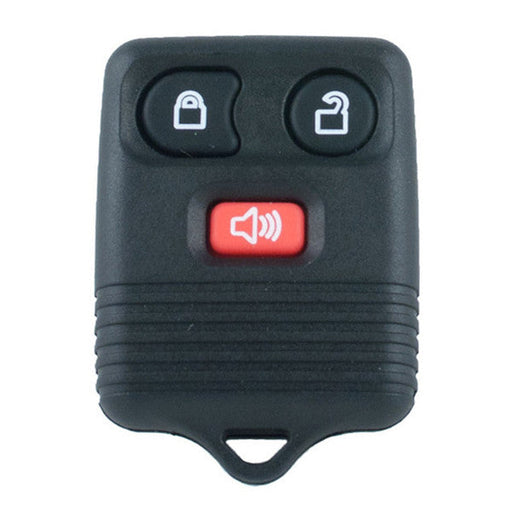
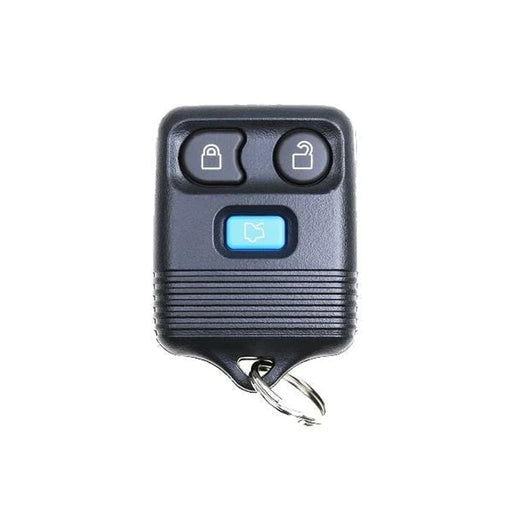
Three-button Ford-family remotes commonly provide lock, unlock, and panic controls. Other three-button designs may replace panic with a rear-hatch function, particularly for fleet or utility applications.
Available products include remotes associated with FCC IDs and part numbers such as:
- CWTWB1U331
- CWTWB1U345
- 8L3Z-15K601-B
- RC2Z-15K601-A
- Other application-specific references
Compare the button symbols and complete electronic specifications. Two three-button remotes may look similar while using different frequencies or programming systems.
Four-Button Ford, Lincoln, and Mercury Remotes
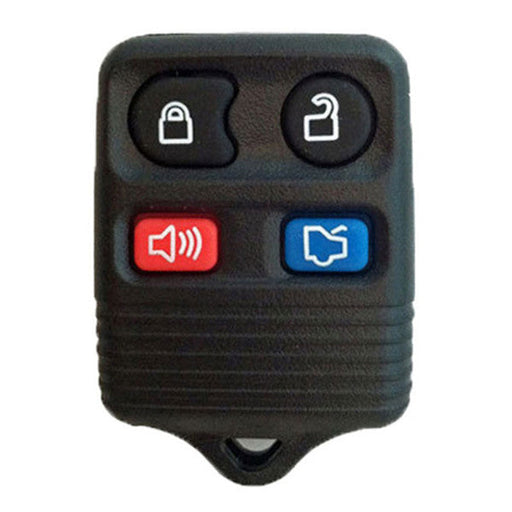
Four-button remotes add another function to the common lock, unlock, and panic layout. Depending on the vehicle, the fourth button may operate a trunk, liftgate, or another factory feature.
Available four-button replacements may use FCC IDs such as CWTWB1U331 or CWTWB1U345 and part numbers such as 2S4T-15K601-AB.
Button count alone is not sufficient to establish compatibility. Match the transmitter information and part-number family with the original remote.
Five-Button SUV Remotes
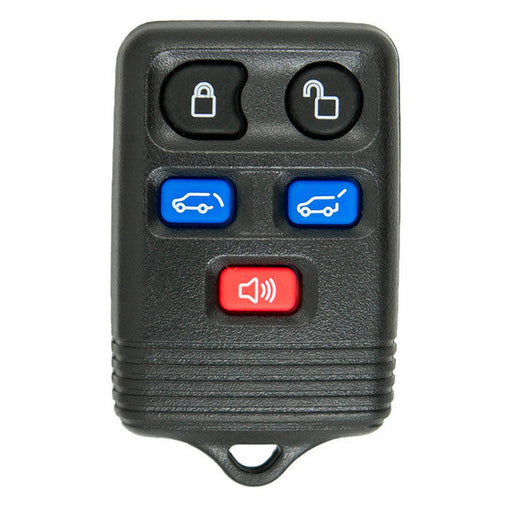
Some Ford and Lincoln SUVs use five-button transmitters with controls for lock, unlock, panic, rear hatch, and another supported function.
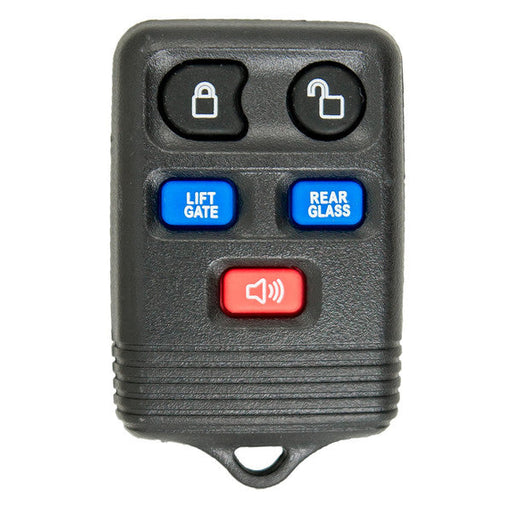
Available five-button products may use FCC ID CWTWB1U551. Similar housings may be configured for different vehicle features, making the button icons particularly important.
Check whether the original remote includes:
- Rear hatch release
- Glass release
- Trunk release
- Remote-start function
- Another model-specific control
Choose a replacement with the same supported layout.
Five-Button Van Remotes
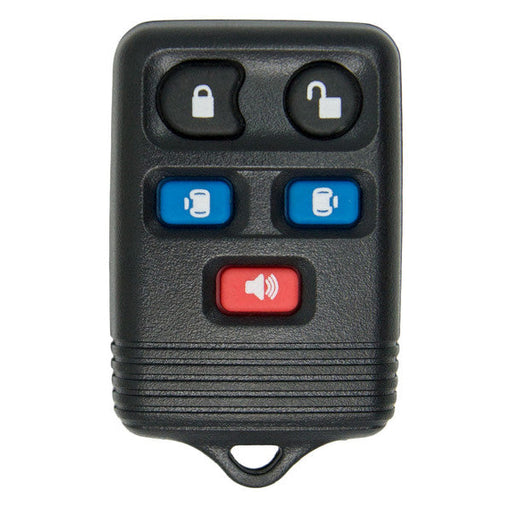
Certain Ford, Lincoln, and Mercury van applications use five-button remotes with power sliding-door controls. A typical layout may include:
- Lock
- Unlock
- Left sliding door
- Right sliding door
- Panic
These remotes may also use FCC ID CWTWB1U551, but sharing an FCC ID does not mean every five-button layout is interchangeable.
A remote intended for an SUV liftgate should not be substituted for one designed to control two power sliding doors. Match the icons, part number, and vehicle application.
Ford Explorer PPV Remotes
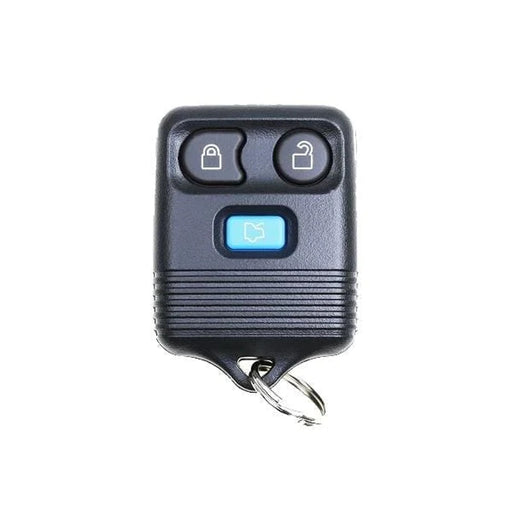
The collection includes new OEM remotes for compatible Ford Explorer Police Interceptor Utility or PPV applications. These remotes may use three-button layouts with lock, unlock, and hatch functions.
Available Explorer PPV references may include:
- RB5T-15K60-FA
- GB5Z-15K601-C
- FCC ID 2ACH3
- FCC ID CWTWB1U0009
Fleet and police-vehicle remotes can differ from civilian Explorer transmitters. Confirm the complete vehicle configuration and original remote specifications before ordering.
Match the Remote FCC ID
The FCC ID identifies the transmitter design and is one of the strongest compatibility references. FCC IDs represented in the collection may include:
- CWTWB1U331
- CWTWB1U345
- CWTWB1U551
- CWTWB1U0009
- 2ACH3
- 2ACH3WB1G0608
Compare the complete identifier. A partial match may indicate another circuit board, frequency, or vehicle application.
The FCC ID may appear:
- On the rear of the remote
- Inside the battery compartment
- On the circuit-board label
- In the original keyless-entry documentation
If the original label is unavailable, use the vehicle information and manufacturer part number for confirmation.
Ford Remote Part Numbers
Ford remote part numbers often contain a base number such as 15K601, but the prefixes and suffixes identify different applications or revisions.
Part numbers represented in the collection may include:
- 8L3Z-15K601-B
- 2S4T-15K601-AB
- RB5T-15K60-FA
- GB5Z-15K601-C
- RC2Z-15K601-A
Do not match only the 15K601 portion. Compare the complete number, including every prefix and suffix.
A superseding part number may replace an earlier reference, but the FCC ID, button layout, and frequency should still be verified.
315 MHz Keyless Remotes
Many traditional Ford, Lincoln, and Mercury standalone remotes operate at 315 MHz. This frequency is represented across several three-, four-, and five-button products in the collection.
An incorrect-frequency remote will not communicate properly with the vehicle even when the housing looks identical.
Because numerous Ford-family transmitters use 315 MHz, the frequency must be matched together with the FCC ID and part number.
433 MHz and 434 MHz Ford Remotes
Select newer or application-specific Ford remotes operate at 433 MHz or 434 MHz. Examples in the collection include OEM products associated with FCC IDs such as 2ACH3 or 2ACH3WB1G0608.
A 433 MHz or 434 MHz remote cannot generally replace a 315 MHz transmitter. The vehicle receiver must support the remote’s exact frequency and electronic protocol.
Regional specifications can also affect frequency, so confirm whether the vehicle was produced for the same market as the replacement remote.
New OEM Ford Remotes
New OEM remotes use original-equipment components for their listed applications. They are a suitable option when a factory transmitter is preferred.
A new OEM remote still requires programming before it can control the vehicle. Confirm whether the battery is installed and whether any application-specific setup is required.
OEM packaging or appearance does not make the remote universal across Ford, Lincoln, and Mercury vehicles.
Aftermarket Replacement Remotes
Aftermarket remotes provide a cost-effective option for supported factory keyless-entry systems. They are available in multiple button configurations and may replace one or more original part numbers.
A compatible aftermarket remote should match:
- FCC ID
- Frequency
- Button count
- Button functions
- Vehicle application
- Required programming method
Check the listing to determine whether the battery is included.
Paladin Premium Aftermarket Remotes
Select Ford-family remotes may be available as Paladin premium aftermarket replacements. These provide another professional replacement option for compatible vehicles.
Paladin remotes must meet the same application requirements as OEM or other aftermarket products. Verify the FCC ID, frequency, part number, and buttons before beginning programming.
CR2032 Remote Batteries
Many Ford, Lincoln, and Mercury remotes in this collection use a CR2032 lithium coin-cell battery.
A weak remote battery may cause:
- Reduced operating range
- Intermittent button response
- Multiple presses being required
- Inconsistent lock or unlock operation
- A transmitter that appears inactive
Confirm the battery orientation when installing a replacement. A new battery will not resolve an incompatible remote, damaged circuit board, or lost vehicle pairing.
Programming a Ford-Family Remote
A replacement remote must be registered with the vehicle before it can operate the keyless-entry system. Programming requirements depend on the vehicle, model year, body style, and installed security system.
Depending on the application, programming may require:
- An onboard procedure
- One or more working ignition keys
- A defined ignition-cycle sequence
- Professional diagnostic equipment
- A qualified automotive locksmith
- Programming all desired remotes in one session
Some procedures erase previously stored transmitters. Have every remote that should continue working available during programming.
Remote Programming vs. Transponder Programming
Programming a standalone keyless-entry remote is different from programming a transponder key.
Remote programming connects the transmitter to the vehicle’s locking system. Transponder programming authorizes a chipped key to start the engine.
A vehicle may therefore require separate procedures for:
- Mechanical blade cutting
- Immobilizer or transponder registration
- Keyless-entry remote programming
A successfully programmed remote does not replace a missing or unprogrammed ignition key.
Replacing a Lost Remote
If the original standalone remote is lost but the ignition key remains available, a compatible replacement can restore the supported keyless-entry controls.
For improved security, determine whether the missing transmitter should be removed from the vehicle’s memory. Some programming procedures automatically erase previously stored remotes, while others add another transmitter without removing the old one.
Consult the applicable vehicle procedure or a qualified automotive locksmith.
Replacing a Damaged Remote
A complete replacement may be needed when the original remote has:
- Water damage
- Corroded battery contacts
- A failed circuit board
- Broken buttons
- Missing electronic components
- Intermittent transmitter output
- Severe housing damage
If the circuit board still works and only the housing or button pad is damaged, a replacement shell may be sufficient. Inspect and test the existing electronics before choosing the repair.
Adding a Spare Remote
A spare remote provides convenient backup access and can be useful for another driver. It should be programmed and tested before the primary transmitter is lost.
The spare must match the vehicle’s original system. Do not assume that every Ford-style remote using the same number of buttons will be compatible.
Testing the Replacement Remote
After programming, verify every supported function:
- Lock all doors
- Unlock the driver’s door
- Unlock the remaining doors
- Operate the trunk or rear hatch
- Test power sliding doors, when equipped
- Activate and cancel the panic alarm
- Check normal operating range
- Confirm that other programmed remotes still work
If a button does not perform the expected function, recheck the remote layout and vehicle application.
How to Choose the Correct Remote
Before ordering, verify:
- Vehicle year, make, and model
- Body style and trim
- Standalone remote configuration
- FCC ID
- Manufacturer part number
- Operating frequency
- Number of buttons
- Button icons and functions
- Battery type
- OEM, Paladin, or aftermarket condition
- Programming requirements
- Whether all stored remotes will be needed
Checking every available identifier helps prevent ordering a transmitter that looks correct but cannot communicate with the vehicle.
Shop Ford, Lincoln, and Mercury Remotes
Browse new OEM, Paladin premium aftermarket, and standard aftermarket keyless-entry remotes for compatible Ford, Lincoln, and Mercury vehicles. Noble Key Supply carries three-, four-, and five-button transmitters in multiple frequencies and application-specific configurations.
Compare the FCC ID, complete part number, frequency, buttons, and vehicle information to select the correct standalone remote.
Original price
$0.00
-
Original price
$0.00
Original price
$0.00
$3.99
$3.99
-
$3.99
Current price
$3.99
R-FD-3
In Stock
Ford Lincoln Mercury 3-Button Remote CWTWB1U331 8L3Z-15K601-BAftermarket ReplacementFCC ID: CWTWB1U331/CWTWB1U345Frequency: 315 MHzBattery: CR2032B...
View Full Details
Original price
$0.00
-
Original price
$0.00
Original price
$0.00
$3.99
$3.99
-
$3.99
Current price
$3.99
Original price
$0.00
-
Original price
$0.00
Original price
$0.00
$4.99
$4.99
-
$4.99
Current price
$4.99
R-FD-4
In Stock
Ford Lincoln Mercury 4-Button Remote CWTWB1U331 2S4T-15K601-ABAftermarket ReplacementFCC ID: CWTWB1U331/CWTWB1U345Frequency: 315 MHzBattery: CR2032...
View Full Details
Original price
$0.00
-
Original price
$0.00
Original price
$0.00
$4.99
$4.99
-
$4.99
Current price
$4.99
Original price
$0.00
-
Original price
$0.00
Original price
$0.00
$15.99
$15.99
-
$15.99
Current price
$15.99
R-FD-7
In Stock
Ford Lincoln 5-Button Remote CWTWB1U551Aftermarket ReplacementFCC ID: CWTWB1U551Frequency: 315 MHzBattery: CR2032Button: Lock, Unlock, Rear Hatch, ...
View Full Details
Original price
$0.00
-
Original price
$0.00
Original price
$0.00
$15.99
$15.99
-
$15.99
Current price
$15.99
Original price
$0.00
-
Original price
$0.00
Original price
$0.00
$15.99
$15.99
-
$15.99
Current price
$15.99
R-FD-8
In Stock
Ford Lincoln 5-Button Remote CWTWB1U551Aftermarket ReplacementFCC ID: CWTWB1U551Frequency: 315 MHzBattery: CR2032Button: Lock, Unlock, Rear Hatch, ...
View Full Details
Original price
$0.00
-
Original price
$0.00
Original price
$0.00
$15.99
$15.99
-
$15.99
Current price
$15.99
Original price
$0.00
-
Original price
$0.00
Original price
$0.00
$59.99
$59.99
-
$59.99
Current price
$59.99
RB5T-15K60-FA-OEM
Out of stock
Ford Explorer PPV 3-Button Remote RB5T-15K60-FAOEM NEWFCC ID: 2ACH3Frequency: 434 MHzBattery: CR2032Button: Lock, Unlock, HatchReplaces PN: RB5T-15...
View Full Details
Original price
$0.00
-
Original price
$0.00
Original price
$0.00
$59.99
$59.99
-
$59.99
Current price
$59.99
Sold Out
Original price
$0.00
-
Original price
$0.00
Original price
$0.00
$7.99
$7.99
-
$7.99
Current price
$7.99
R-FD-5
In Stock
Ford Lincoln Mercury 5-Button Remote CWTWB1U551Aftermarket ReplacementFCC ID: CWTWB1U551Frequency: 315 MHzBattery: CR2032Button: Lock, Unlock, Left...
View Full Details
Original price
$0.00
-
Original price
$0.00
Original price
$0.00
$7.99
$7.99
-
$7.99
Current price
$7.99
Original price
$0.00
-
Original price
$0.00
Original price
$0.00
$59.99
$59.99
-
$59.99
Current price
$59.99
GB5Z-15K601-C-OEM
Out of stock
Ford Explorer PPV 3-Button Remote GB5Z-15K601-COEM NEWFCC ID: CWTWB1U0009Frequency: 315 MHzBattery: CR2032Button: Lock, Unlock, HatchReplaces PN: G...
View Full Details
Original price
$0.00
-
Original price
$0.00
Original price
$0.00
$59.99
$59.99
-
$59.99
Current price
$59.99
Sold Out

Original price
$0.00
-
Original price
$0.00
Original price
$0.00
$99.99
$99.99
-
$99.99
Current price
$99.99
RC2Z-15K601-A-OEM
Low stock
Ford 3-Button Remote RC2Z-15K601-AOEM NEWFCC ID: 2ACH3WB1G0608Frequency: 433 MHzBattery: CR2032Button: Lock, Unlock, PanicReplaces PN: RC2Z-15K601-...
View Full Details
Original price
$0.00
-
Original price
$0.00
Original price
$0.00
$99.99
$99.99
-
$99.99
Current price
$99.99
Shop standalone keyless-entry remotes for compatible Ford, Lincoln, and Mercury vehicles at Noble Key Supply. This collection includes new OEM, Paladin premium aftermarket, and standard aftermarket replacement remotes in several button layouts and electronic configurations.
Available products range from familiar three- and four-button transmitters to five-button remotes for SUVs and vans. Match the FCC ID, frequency, manufacturer part number, button functions, and vehicle application before ordering.
Standalone Ford, Lincoln, and Mercury Remotes
A standalone remote is a separate transmitter used alongside the vehicle’s mechanical or transponder key. It controls supported keyless-entry functions but does not contain an attached ignition blade.
Depending on the vehicle, remote buttons may operate:
- Door locking
- Door unlocking
- Panic alarm
- Trunk release
- Rear hatch release
- Left power sliding door
- Right power sliding door
- Other factory keyless-entry functions
The exact functions depend on the remote and vehicle equipment. A remote with additional buttons will not add features that the vehicle does not support.
Standalone Remotes vs. Remote Keys
Ford, Lincoln, and Mercury vehicles may use several different key styles. Identifying the original system is essential before selecting a replacement.
A standalone remote:
- Is separate from the ignition key
- Does not have an attached blade
- Controls keyless-entry functions
- Usually does not contain the engine-start transponder
- Does not replace a lost ignition key
A remote-head key:
- Combines remote buttons and a fixed blade
- May contain an immobilizer transponder
- Requires blade cutting
- Requires key programming for engine starting
A proximity key:
- Supports compatible passive-entry systems
- Communicates with a push-button-start vehicle
- Contains immobilizer and remote electronics
- May include a removable emergency blade
If the original key has an attached blade or is used for push-button starting, choose the appropriate remote-key or proximity-key collection instead.
Three-Button Ford Remotes
Three-button Ford-family remotes commonly provide lock, unlock, and panic controls. Other three-button designs may replace panic with a rear-hatch function, particularly for fleet or utility applications.
Available products include remotes associated with FCC IDs and part numbers such as:
- CWTWB1U331
- CWTWB1U345
- 8L3Z-15K601-B
- RC2Z-15K601-A
- Other application-specific references
Compare the button symbols and complete electronic specifications. Two three-button remotes may look similar while using different frequencies or programming systems.
Four-Button Ford, Lincoln, and Mercury Remotes
Four-button remotes add another function to the common lock, unlock, and panic layout. Depending on the vehicle, the fourth button may operate a trunk, liftgate, or another factory feature.
Available four-button replacements may use FCC IDs such as CWTWB1U331 or CWTWB1U345 and part numbers such as 2S4T-15K601-AB.
Button count alone is not sufficient to establish compatibility. Match the transmitter information and part-number family with the original remote.
Five-Button SUV Remotes
Some Ford and Lincoln SUVs use five-button transmitters with controls for lock, unlock, panic, rear hatch, and another supported function.
Available five-button products may use FCC ID CWTWB1U551. Similar housings may be configured for different vehicle features, making the button icons particularly important.
Check whether the original remote includes:
- Rear hatch release
- Glass release
- Trunk release
- Remote-start function
- Another model-specific control
Choose a replacement with the same supported layout.
Five-Button Van Remotes
Certain Ford, Lincoln, and Mercury van applications use five-button remotes with power sliding-door controls. A typical layout may include:
- Lock
- Unlock
- Left sliding door
- Right sliding door
- Panic
These remotes may also use FCC ID CWTWB1U551, but sharing an FCC ID does not mean every five-button layout is interchangeable.
A remote intended for an SUV liftgate should not be substituted for one designed to control two power sliding doors. Match the icons, part number, and vehicle application.
Ford Explorer PPV Remotes
The collection includes new OEM remotes for compatible Ford Explorer Police Interceptor Utility or PPV applications. These remotes may use three-button layouts with lock, unlock, and hatch functions.
Available Explorer PPV references may include:
- RB5T-15K60-FA
- GB5Z-15K601-C
- FCC ID 2ACH3
- FCC ID CWTWB1U0009
Fleet and police-vehicle remotes can differ from civilian Explorer transmitters. Confirm the complete vehicle configuration and original remote specifications before ordering.
Match the Remote FCC ID
The FCC ID identifies the transmitter design and is one of the strongest compatibility references. FCC IDs represented in the collection may include:
- CWTWB1U331
- CWTWB1U345
- CWTWB1U551
- CWTWB1U0009
- 2ACH3
- 2ACH3WB1G0608
Compare the complete identifier. A partial match may indicate another circuit board, frequency, or vehicle application.
The FCC ID may appear:
- On the rear of the remote
- Inside the battery compartment
- On the circuit-board label
- In the original keyless-entry documentation
If the original label is unavailable, use the vehicle information and manufacturer part number for confirmation.
Ford Remote Part Numbers
Ford remote part numbers often contain a base number such as 15K601, but the prefixes and suffixes identify different applications or revisions.
Part numbers represented in the collection may include:
- 8L3Z-15K601-B
- 2S4T-15K601-AB
- RB5T-15K60-FA
- GB5Z-15K601-C
- RC2Z-15K601-A
Do not match only the 15K601 portion. Compare the complete number, including every prefix and suffix.
A superseding part number may replace an earlier reference, but the FCC ID, button layout, and frequency should still be verified.
315 MHz Keyless Remotes
Many traditional Ford, Lincoln, and Mercury standalone remotes operate at 315 MHz. This frequency is represented across several three-, four-, and five-button products in the collection.
An incorrect-frequency remote will not communicate properly with the vehicle even when the housing looks identical.
Because numerous Ford-family transmitters use 315 MHz, the frequency must be matched together with the FCC ID and part number.
433 MHz and 434 MHz Ford Remotes
Select newer or application-specific Ford remotes operate at 433 MHz or 434 MHz. Examples in the collection include OEM products associated with FCC IDs such as 2ACH3 or 2ACH3WB1G0608.
A 433 MHz or 434 MHz remote cannot generally replace a 315 MHz transmitter. The vehicle receiver must support the remote’s exact frequency and electronic protocol.
Regional specifications can also affect frequency, so confirm whether the vehicle was produced for the same market as the replacement remote.
New OEM Ford Remotes
New OEM remotes use original-equipment components for their listed applications. They are a suitable option when a factory transmitter is preferred.
A new OEM remote still requires programming before it can control the vehicle. Confirm whether the battery is installed and whether any application-specific setup is required.
OEM packaging or appearance does not make the remote universal across Ford, Lincoln, and Mercury vehicles.
Aftermarket Replacement Remotes
Aftermarket remotes provide a cost-effective option for supported factory keyless-entry systems. They are available in multiple button configurations and may replace one or more original part numbers.
A compatible aftermarket remote should match:
- FCC ID
- Frequency
- Button count
- Button functions
- Vehicle application
- Required programming method
Check the listing to determine whether the battery is included.
Paladin Premium Aftermarket Remotes
Select Ford-family remotes may be available as Paladin premium aftermarket replacements. These provide another professional replacement option for compatible vehicles.
Paladin remotes must meet the same application requirements as OEM or other aftermarket products. Verify the FCC ID, frequency, part number, and buttons before beginning programming.
CR2032 Remote Batteries
Many Ford, Lincoln, and Mercury remotes in this collection use a CR2032 lithium coin-cell battery.
A weak remote battery may cause:
- Reduced operating range
- Intermittent button response
- Multiple presses being required
- Inconsistent lock or unlock operation
- A transmitter that appears inactive
Confirm the battery orientation when installing a replacement. A new battery will not resolve an incompatible remote, damaged circuit board, or lost vehicle pairing.
Programming a Ford-Family Remote
A replacement remote must be registered with the vehicle before it can operate the keyless-entry system. Programming requirements depend on the vehicle, model year, body style, and installed security system.
Depending on the application, programming may require:
- An onboard procedure
- One or more working ignition keys
- A defined ignition-cycle sequence
- Professional diagnostic equipment
- A qualified automotive locksmith
- Programming all desired remotes in one session
Some procedures erase previously stored transmitters. Have every remote that should continue working available during programming.
Remote Programming vs. Transponder Programming
Programming a standalone keyless-entry remote is different from programming a transponder key.
Remote programming connects the transmitter to the vehicle’s locking system. Transponder programming authorizes a chipped key to start the engine.
A vehicle may therefore require separate procedures for:
- Mechanical blade cutting
- Immobilizer or transponder registration
- Keyless-entry remote programming
A successfully programmed remote does not replace a missing or unprogrammed ignition key.
Replacing a Lost Remote
If the original standalone remote is lost but the ignition key remains available, a compatible replacement can restore the supported keyless-entry controls.
For improved security, determine whether the missing transmitter should be removed from the vehicle’s memory. Some programming procedures automatically erase previously stored remotes, while others add another transmitter without removing the old one.
Consult the applicable vehicle procedure or a qualified automotive locksmith.
Replacing a Damaged Remote
A complete replacement may be needed when the original remote has:
- Water damage
- Corroded battery contacts
- A failed circuit board
- Broken buttons
- Missing electronic components
- Intermittent transmitter output
- Severe housing damage
If the circuit board still works and only the housing or button pad is damaged, a replacement shell may be sufficient. Inspect and test the existing electronics before choosing the repair.
Adding a Spare Remote
A spare remote provides convenient backup access and can be useful for another driver. It should be programmed and tested before the primary transmitter is lost.
The spare must match the vehicle’s original system. Do not assume that every Ford-style remote using the same number of buttons will be compatible.
Testing the Replacement Remote
After programming, verify every supported function:
- Lock all doors
- Unlock the driver’s door
- Unlock the remaining doors
- Operate the trunk or rear hatch
- Test power sliding doors, when equipped
- Activate and cancel the panic alarm
- Check normal operating range
- Confirm that other programmed remotes still work
If a button does not perform the expected function, recheck the remote layout and vehicle application.
How to Choose the Correct Remote
Before ordering, verify:
- Vehicle year, make, and model
- Body style and trim
- Standalone remote configuration
- FCC ID
- Manufacturer part number
- Operating frequency
- Number of buttons
- Button icons and functions
- Battery type
- OEM, Paladin, or aftermarket condition
- Programming requirements
- Whether all stored remotes will be needed
Checking every available identifier helps prevent ordering a transmitter that looks correct but cannot communicate with the vehicle.
Shop Ford, Lincoln, and Mercury Remotes
Browse new OEM, Paladin premium aftermarket, and standard aftermarket keyless-entry remotes for compatible Ford, Lincoln, and Mercury vehicles. Noble Key Supply carries three-, four-, and five-button transmitters in multiple frequencies and application-specific configurations.
Compare the FCC ID, complete part number, frequency, buttons, and vehicle information to select the correct standalone remote.